The Chinese Rings puzzle is a mechanical puzzle in which a row of metal rings is linked to a long bar or loop, and the aim is to remove them all. In China it is called jiu lian huan, the nine linked rings, and a popular story says it was devised by the strategist Zhuge Liang to occupy his wife while he was away at war. In Europe it is known as the baguenaudier, which means time-waster, and the Italian mathematician Gerolamo Cardano described it in 1550, so it is sometimes called Cardan's rings.
How it is played
Each ring is threaded on a post that passes through the next, and all of them hang from a single bar. The first ring, at the free end of the bar, can always be taken off or put back. Any other ring may be taken off or put on only when the ring immediately before it is on and every ring before that is off. The player must therefore remove and replace rings in a particular order, and a set of nine rings needs 341 moves for the shortest solution.
Heritage note
The puzzle was known in northern English households as tiring irons and in France as baguenaudier, and in each place it passed from parent to child and was often made by local blacksmiths. It proved of interest to mathematicians, and in 1872 the French mathematician Louis Gros described its solution in terms of a binary code now called the Gray code, in the same way as the Tower of Hanoi. Modern Chinese rings are made of brass or steel and are a feature of traditional toy shops. It is an exercise in patience, and the correct approach is to work backward as often as forward.
Origins
Traditionally attributed to China, with a legend linking it to the general Zhuge Liang of the 3rd century; documented in Europe from the 1500s.
Available in Arcforge
Try a 90-second preview in your browser Google Play App Store
Sources
Related entries
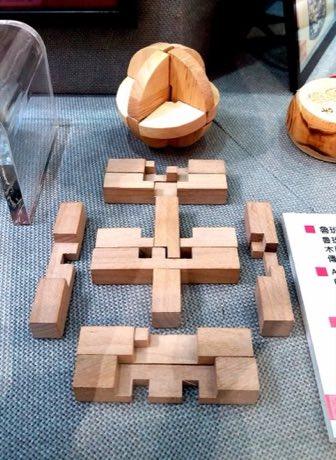
Luban lock
China · Puzzles and mind games


More from China

Bamboo scaffold builder
China · Crafts and making
Banqi
China +1 · Board and table games
Bianzhong
China · Musical instruments
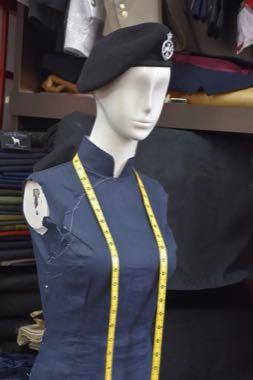
Cheongsam Tailor Shop
China · Crafts and making