Home / Crossroads and Golden Ages / China
Playable heritage gameDutar
Also known as 都塔尔
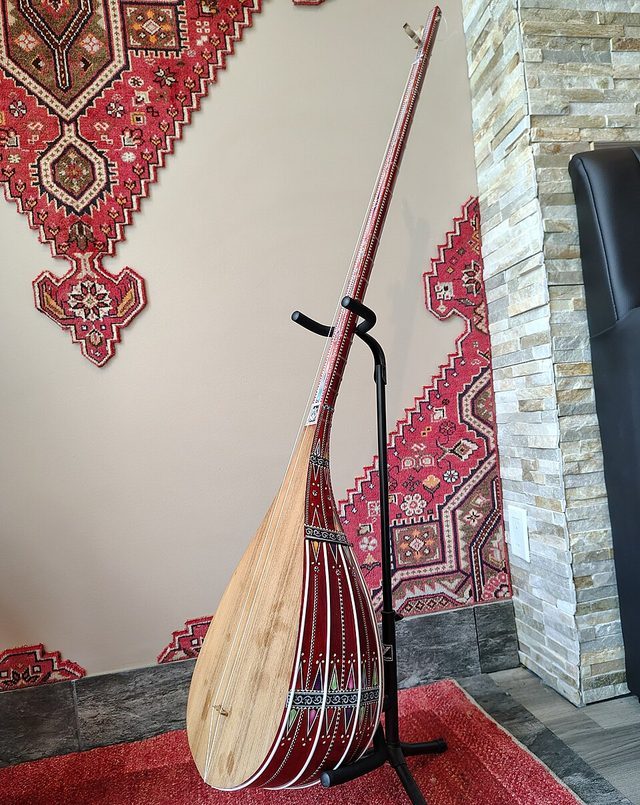
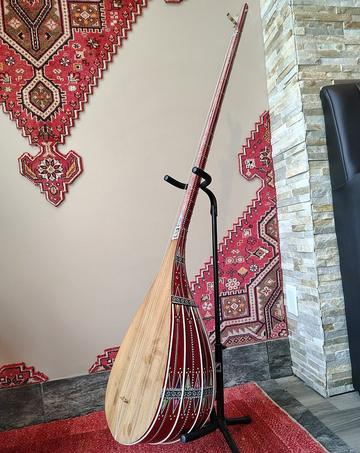
The dutar is a long-necked lute of Central Asia whose name means two strings. A slim pear-shaped body of mulberry wood runs into a very long neck with tied-on gut frets. The strings are played with the fingers, in quick rhythmic patterns or long, singing lines.
How to play
- Two strings run along the long neck, the lower on the left. Each lane marks the fret where a note is played.
- A bead slides down the string to its fret. Pluck the lane as the bead lands.
- Open lanes at the top sound the string without pressing.
- Try the caravan line first, then the quick tapping, then the slow sigh.
Rules at a glance
- The notes come from a seven-note scale starting on A, in two octaves.
- Every phrase is played through twice.
- A pluck on the beat is perfect, a near one is good, and extra plucks cost points.
- The slow sigh has three beats to the bar; the others have two or four.
About the tradition
Two-string lutes like the dutar have been played across Central Asia for centuries, by singers and poets who accompanied their own verses. Makers still tie the gut frets by hand so that each player can tune the scale to taste.
Origins
Usually placed in the era of Crossroads and Golden Ages (about 500 to 1500), although its exact origins are uncertain, within the cultural world of China.
Credits
- Tradition: the Central Asian dutar; phrases written for this game
- Photo: Yuet Man Lee, CC BY-SA 4.0, source on Wikimedia Commons
- Text: CC BY-SA 4.0, World Heritage Games.
Sources

Get the app
Dutar is coming to the App Store and Google Play. One app, many traditions, no account needed.
More games to play

Erhu Two-String Fiddle
China · Musical instrumentsPlay preview · in the Lutes & Fiddles of the World app

More from China

Bamboo scaffold builder
China · Crafts and making
Banqi
China +1 · Board and table games

Cheongsam Tailor Shop
China · Crafts and making