Screenshots
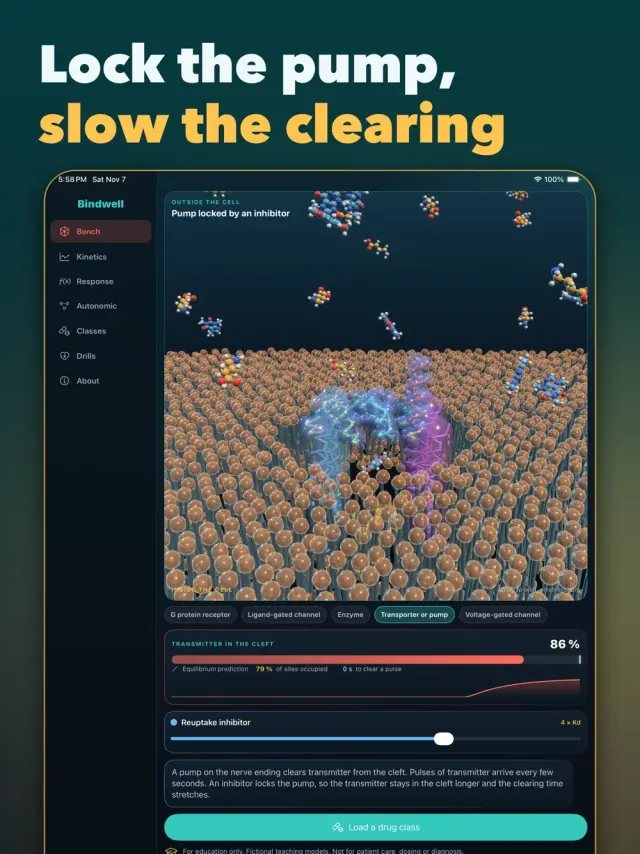
Description
Bindwell turns the two big ideas of pharmacology into things you can see and move: how a drug binds its target, and how the body handles it afterwards.
See Binding Happen
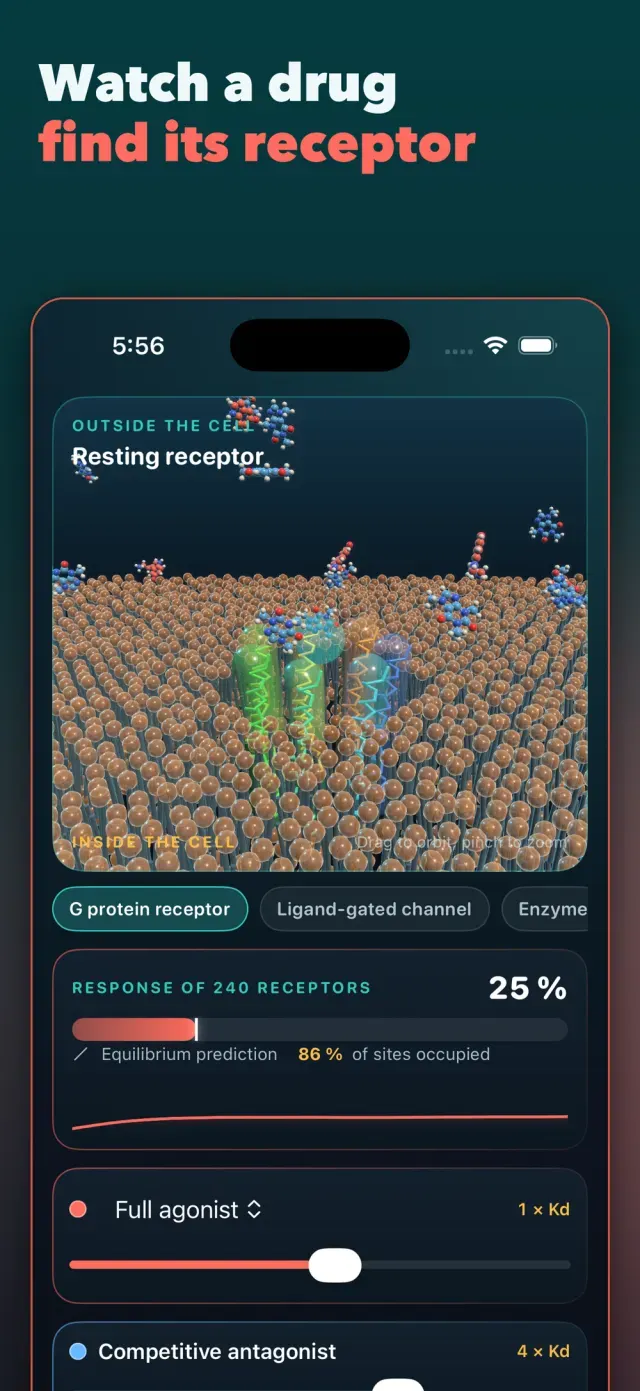
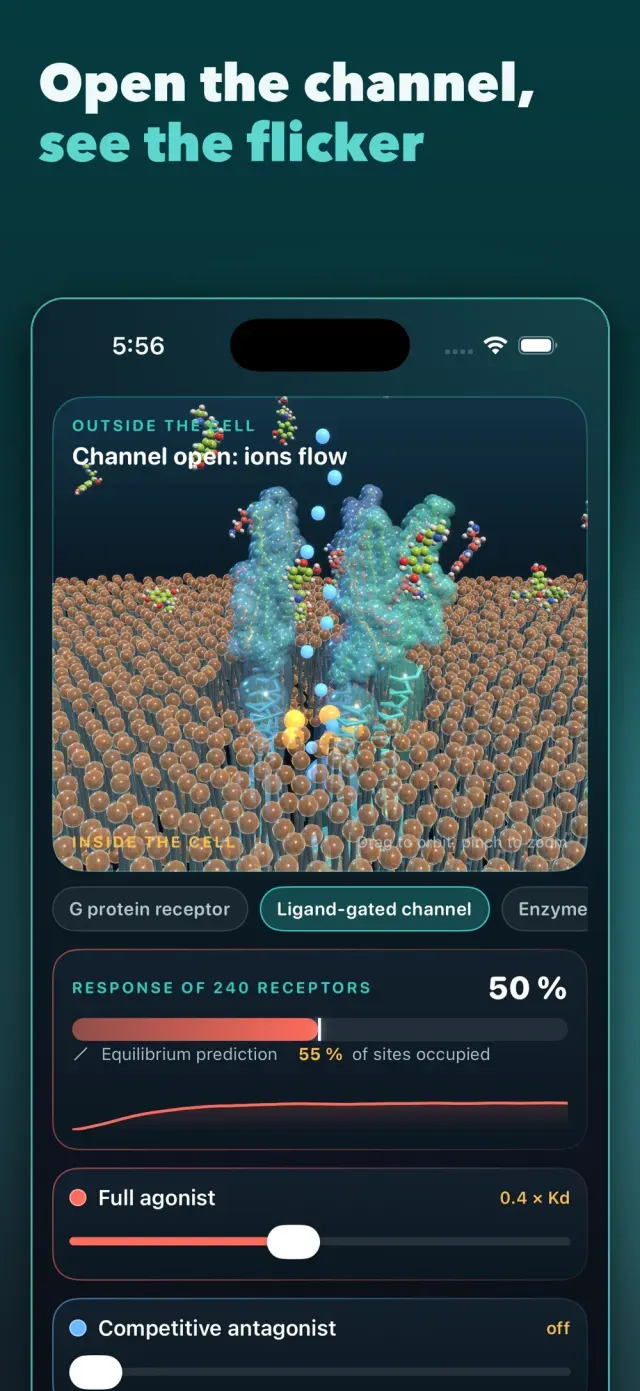
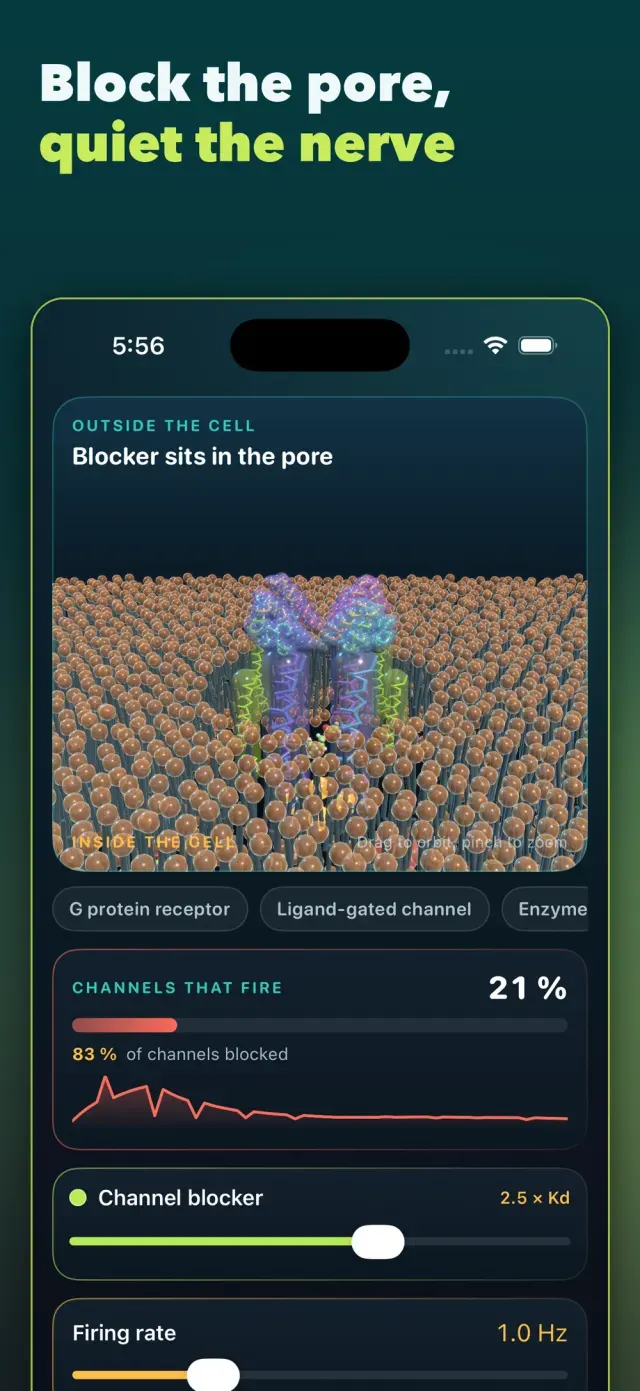
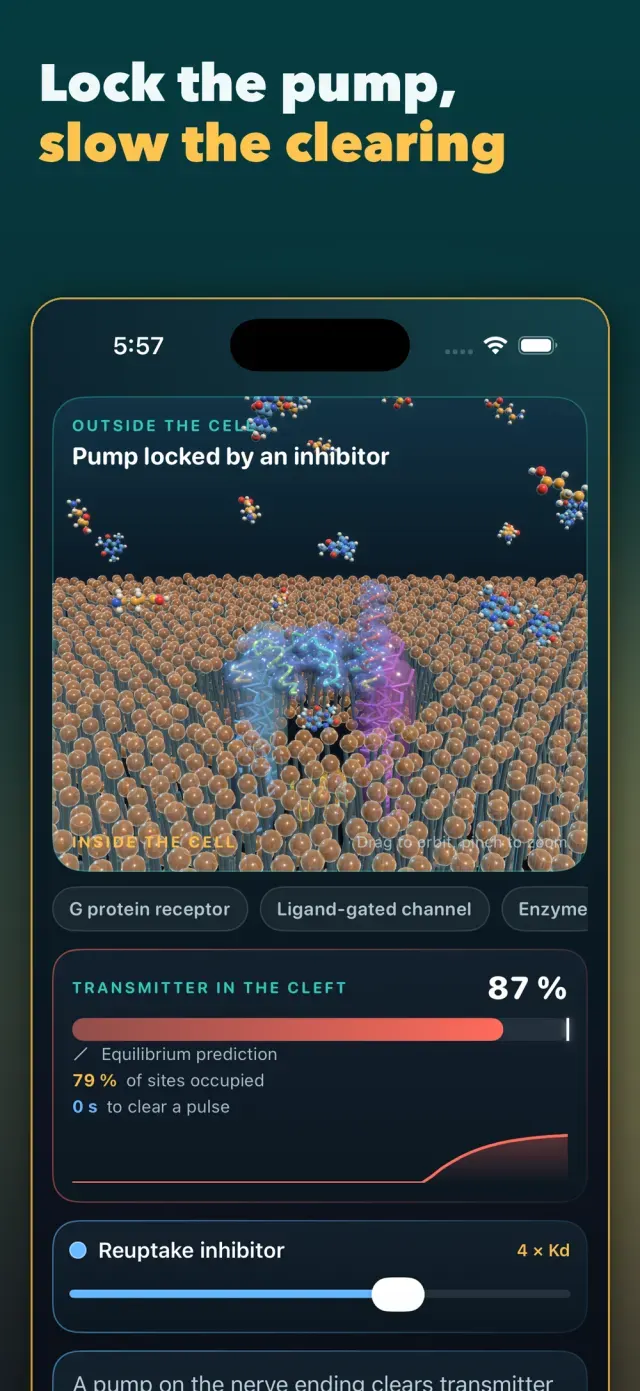
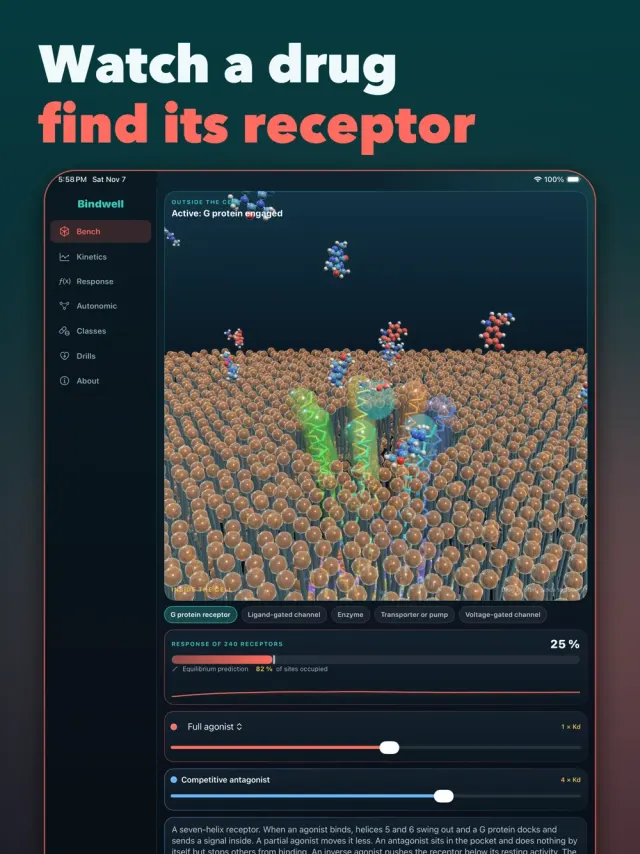
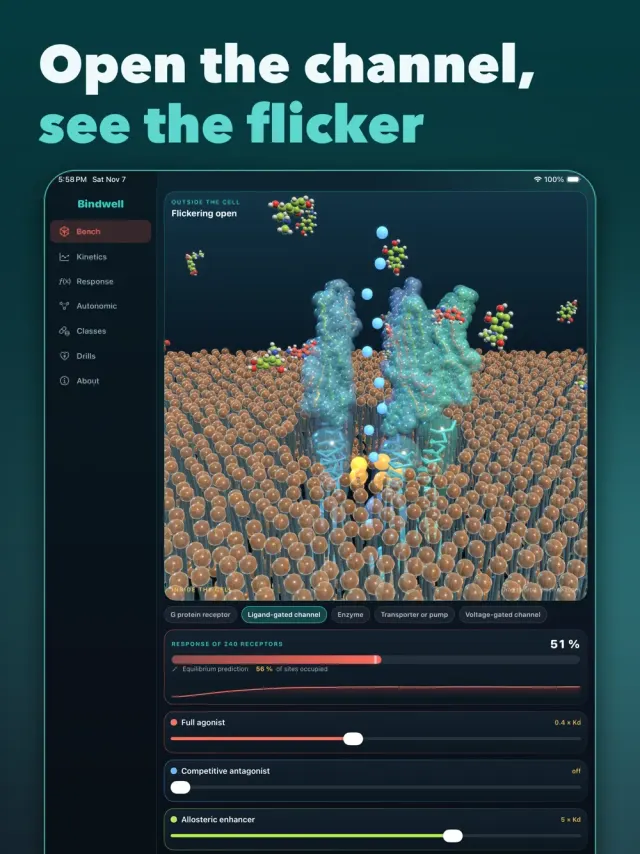
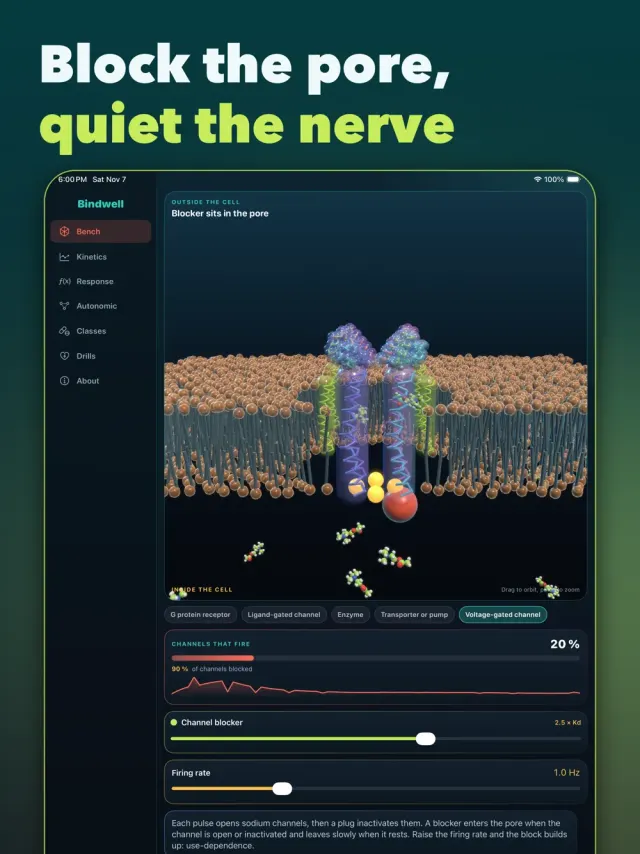
Five 3D scenes put one real-looking target in front of you: a G protein-coupled receptor, a ligand-gated channel, an enzyme, a reuptake pump and a voltage-gated sodium channel. Drag the sliders for agonists, antagonists, blockers or inhibitors and watch a crowd of 240 virtual receptors respond, while a live readout sets the simulation beside the textbook prediction.
Watch a Drug Travel
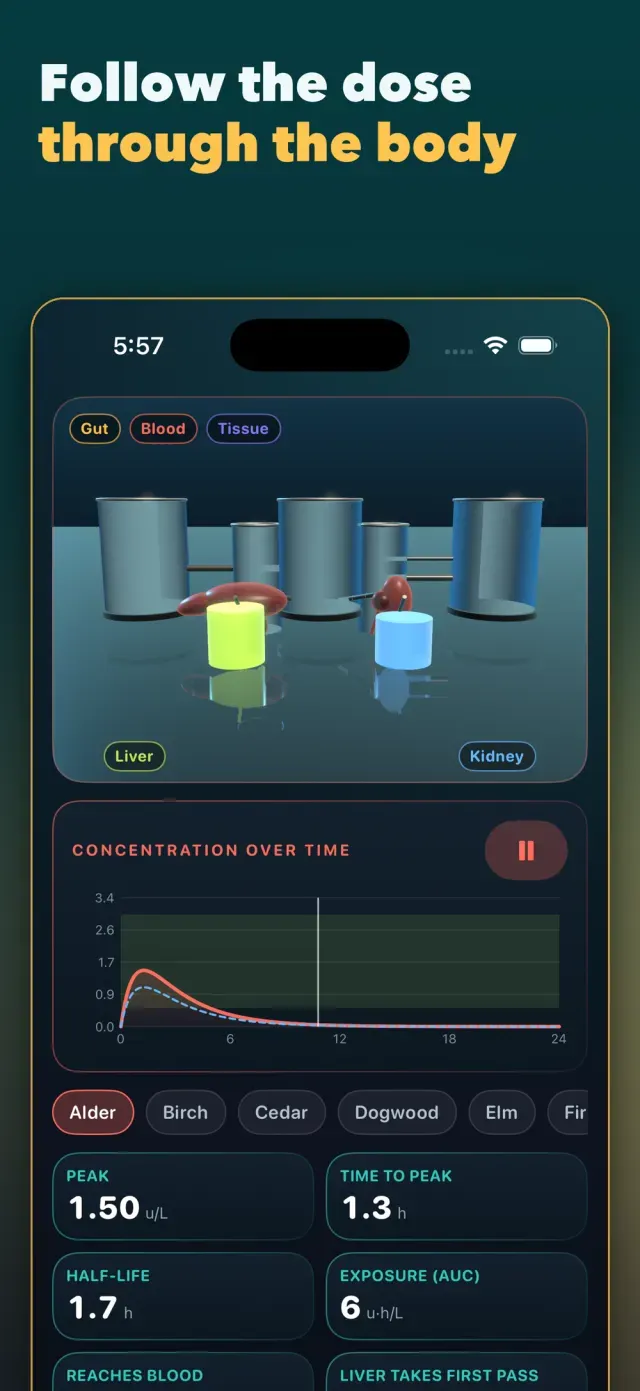
The kinetics lab is a glass-tank model of gut, blood, tissue, liver and kidney. Pick one of six fictional model drugs, change the route, repeat the dose, weaken the liver or kidney, and see peak, time to peak, half-life, first-pass loss and exposure move on the curve.
Draw the Dose-Response Curve
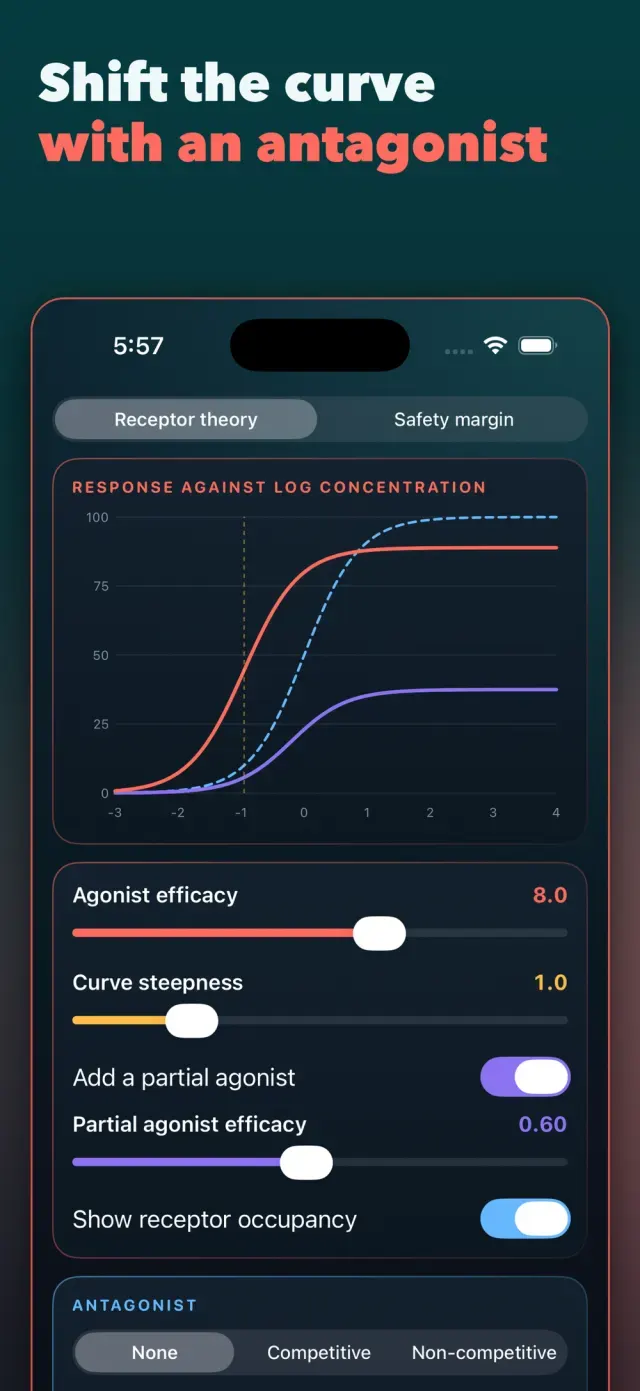
Move efficacy, steepness and a competitive or non-competitive antagonist and see the curve shift, flatten or lose its ceiling. A safety-margin view shows how two curves separate.
Learn the Classes
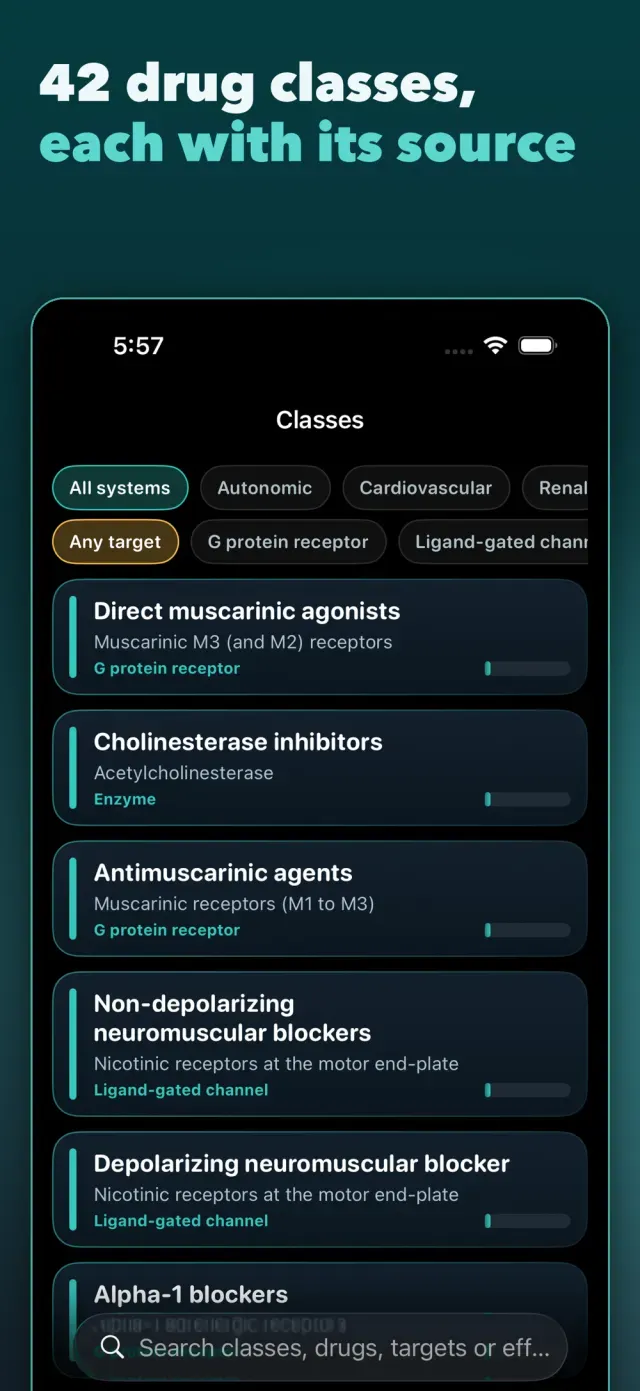
Forty-two drug classes, each with its target, mechanism, effects, typical adverse-effect patterns and example generic names, and a dated reference to an open medical source. The autonomic map links every organ response to its receptor.
Practise
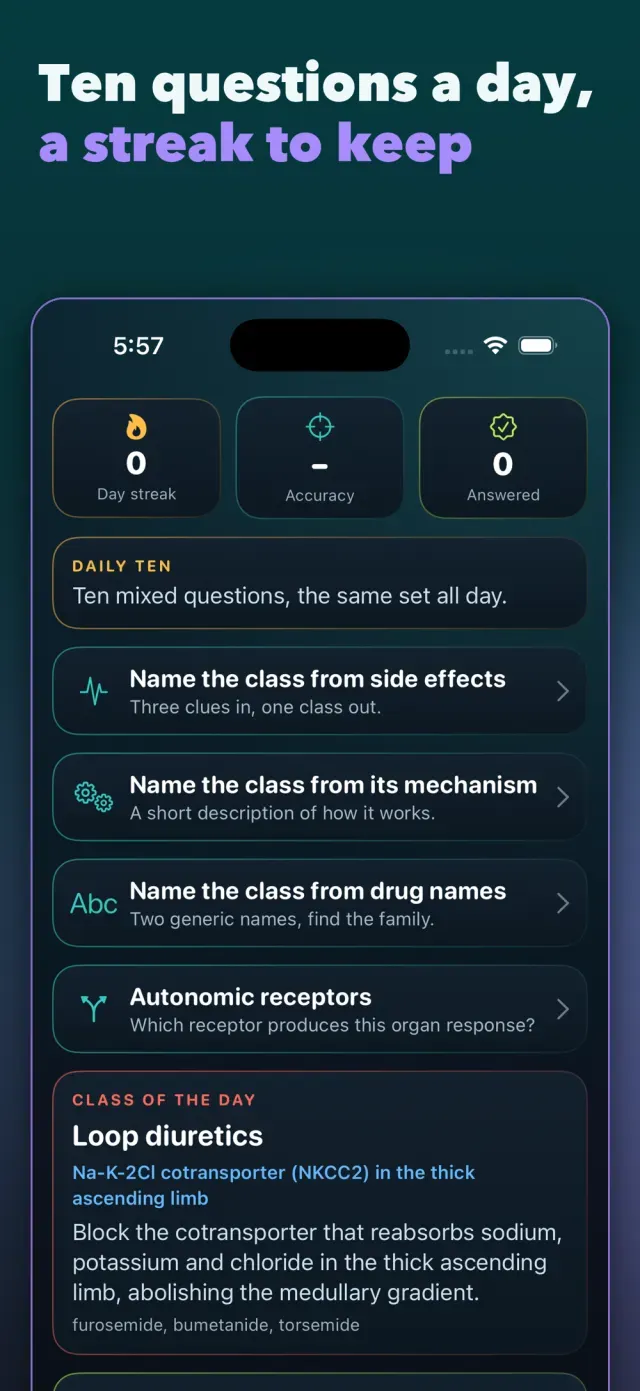
A daily set of ten mixed questions, a streak, and drills for naming a class from its side effects, its mechanism, or two generic names, plus an autonomic receptor drill.
Works Offline
Everything runs on your device with no account. Ads, if shown, and the subscription are the only things that use the network.
For Education Only
Bindwell teaches mechanisms with fictional model drugs and invented numbers. It gives no doses, has no patient calculators and does not check interactions. It is not medical advice and must not be used for patient care.
Free with ads, optional monthly ad-free. Free with ads. An optional monthly plan removes ads.
What's New
First release.
You might also like
 PetrilumeMicrobiology & immunology labComing soon
 RootboundDig roots, watch plants growComing soon
 EosinwellHistology slides and stainsComing soon
 EbbmarkSpaced-repetition study slipsComing soon
 FlagstepCivics questions, spoken aloudComing soon
 FretnookChord finder, songbook, strumComing soon
More from EqualInformation
All apps ShadewrightShadow-puppet stencil puzzlesComing soon
 CalcwickUnits, money, tips and datesComing soon
 DayspireCountdown widgets and scenesComing soon
 DimeglowLog spending in one sentenceComing soon
 DipwickService reminders & fuel logComing soon
 EaveslyHome upkeep and warranty vaultComing soon
 FellwickHabits as trails you walkComing soon
 FoliowickScan to searchable PDFComing soon